Miscellaneous
Fun Facts
- My last name “鬲” has two pronunciations in Chinese: Gé when it is used in a surname, a place name, or an ancient state name, and Lì when it refers to the ancient vessel li (鬲).
- The li is an ancient Chinese cooking vessel, typically with three hollow legs, a structure that increases the surface area exposed to fire and improves heating efficiency. Early examples were often made of pottery, while later examples were also cast in bronze (See Figure 1 below).
- A simple way to distinguish a li (鬲) from a ding (鼎) is that a li typically has hollow legs, whereas a ding is usually described as having solid legs.
- Pottery li first appeared in the Late Neolithic period, roughly around 5,000 years ago. Through the Xia, Shang, and Zhou periods, li developed further and gradually evolved from an everyday utensil into a ritual vessel. The modern Chinese character “鬲” also originated as a pictograph of the vessel itself: its earliest forms in oracle bone and bronze inscriptions visually resemble the tripod cooking vessel, and over time the character gradually evolved into its present form (see Figure 2 below).
- There was an ancient Ge state (also called Youge State, 有鬲氏), traditionally said to have invented the vessel li and to have participated in flood-control efforts associated with Yu the Great. The Ge (鬲) surname has survived to this day, but it remains very rare, with only a little over two thousand people in the world.
- (中文版)“鬲”字是个多音字,有2个读音[1]:在人名、地名、古国名中读 “Gé”,在指代器物的时候读 “Lì”。
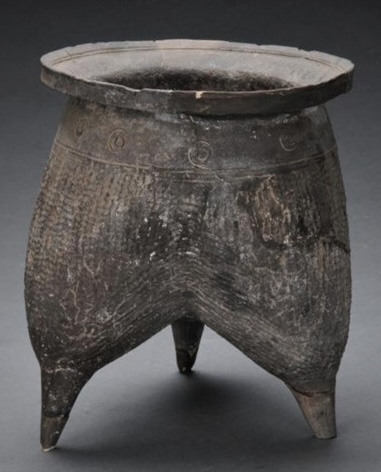
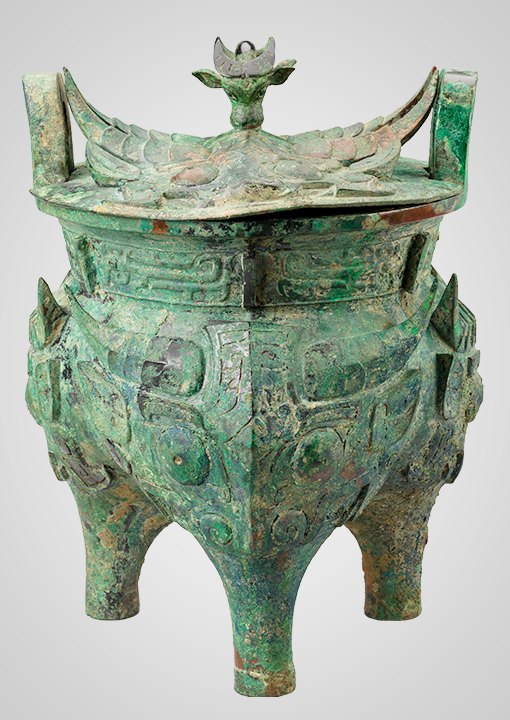
Figure 1. Two examples of li: the left one was made of pottery, and the right one was made of bronze (images from Henan Museum (left) and Capital Museum (right)).
图1. 河南博物院的绳纹陶鬲(左图)和首都博物馆的伯矩鬲(右图)。
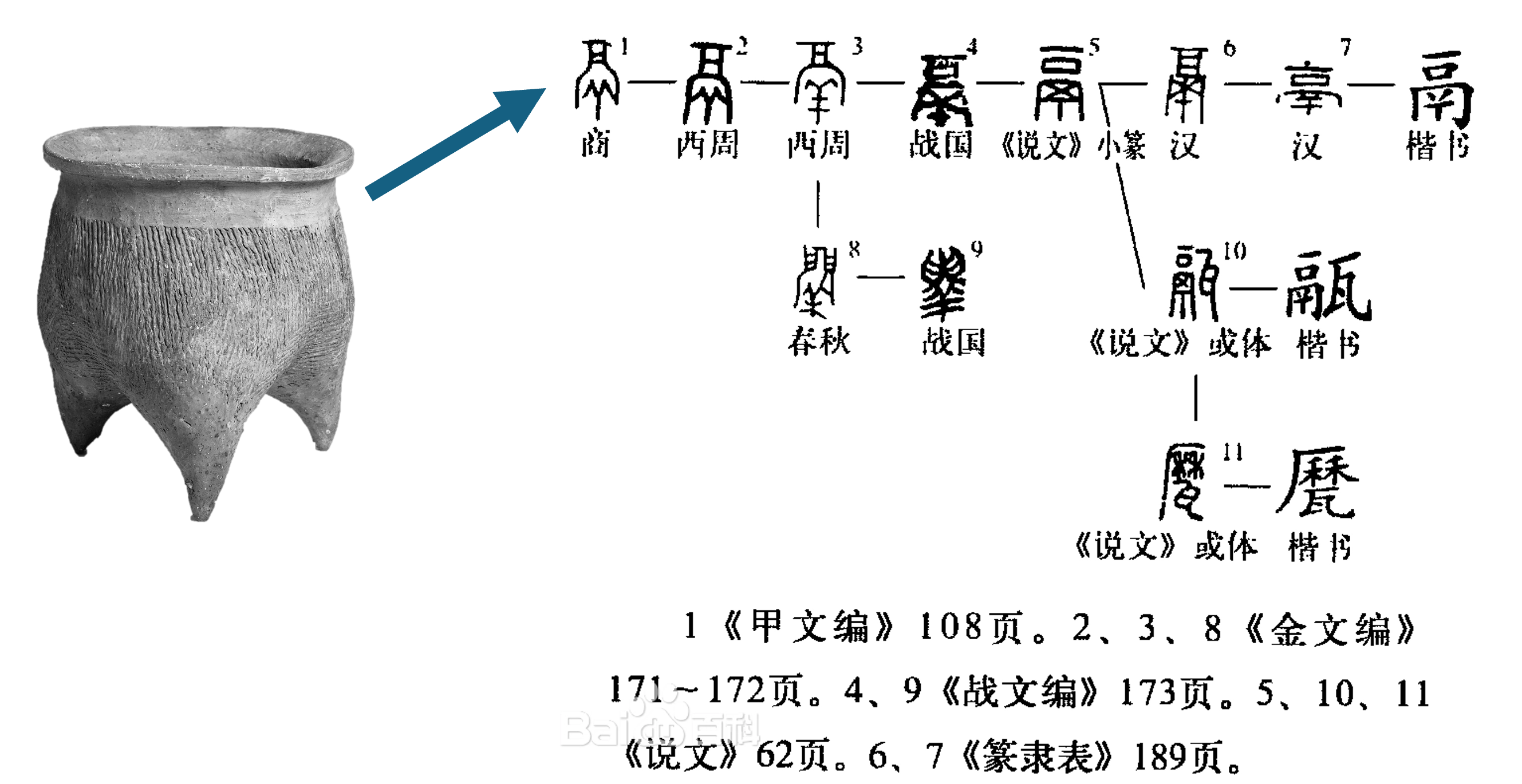
Figure 2. Evolution of the Chinese character "鬲" (images from Wiki (left) and Baike.Baidu (right)).
Thank You
- I want to thank my family, friends, teachers, advisors, and all the people who have helped, supported, and influenced me.